NOUS RENDRE VISITE
Visit us

Visit us
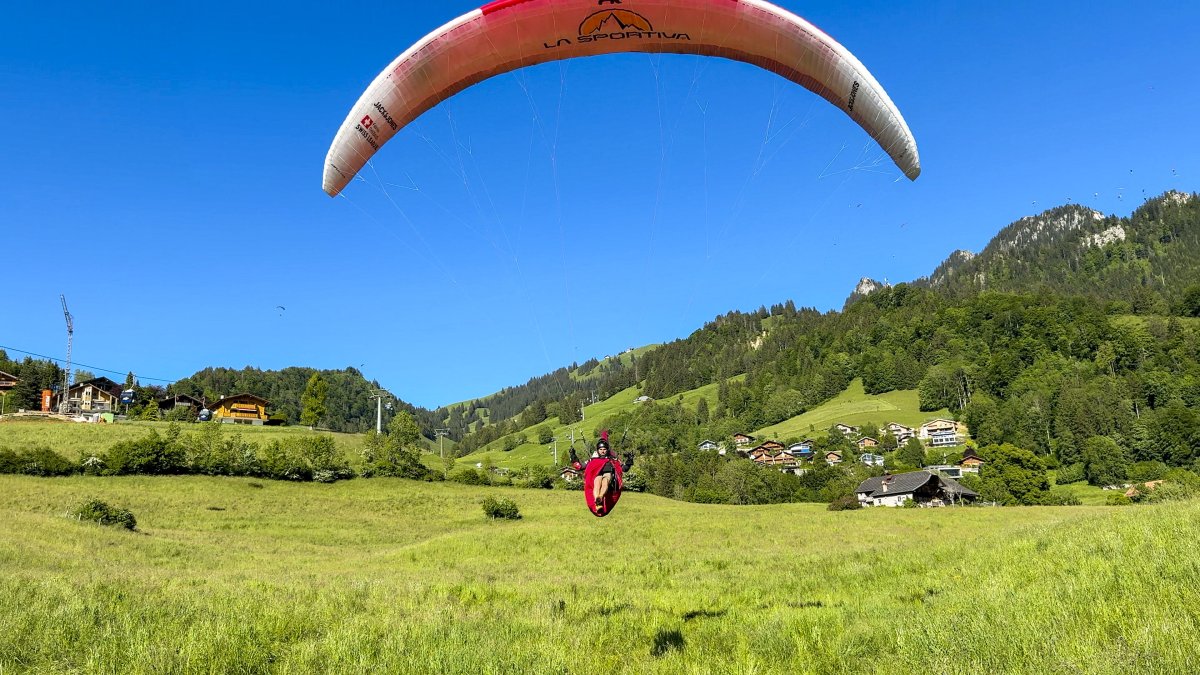
Tout au long de la semaine, vous aurez l’occasion d’observer les pilotes en vol. En règle générale, les décollages ont lieu entre 13h et 14h, tandis que les atterrissages se font entre 16h et 17h, selon le parcours (manche) du jour. Vous pouvez assister aux décollages depuis le site de Vounetz. Toutefois, nous vous recommandons de venir observer les atterrissages à Charmey, dans le champ situé à côté du parking des télécabines. Pendant toute la durée de la compétition, il est également possible de suivre la course en direct sur le site « lt.flymaster.net ». Il suffit de sélectionner «Swiss Open Charmey» dans le menu déroulant «Live Groups» pour visualiser la position des pilotes en temps réel.
Throughout the week, you'll have the opportunity to watch the pilots in flight. Takeoffs generally occur between 1 p.m. and 2 p.m., while landings take place between 4 p.m. and 5 p.m., depending on the day's course (round). You can watch the takeoffs from the Vounetz site. However, we recommend watching the landings in Charmey, in the field next to the cable car parking lot. Throughout the competition, you can also follow the race live on the website "lt.flymaster.net". Simply select "Swiss Open Charmey" from the "Live Groups" dropdown menu to see the pilots' positions in real time.
The rules
Une compétition de parapente, ça marche comment ?
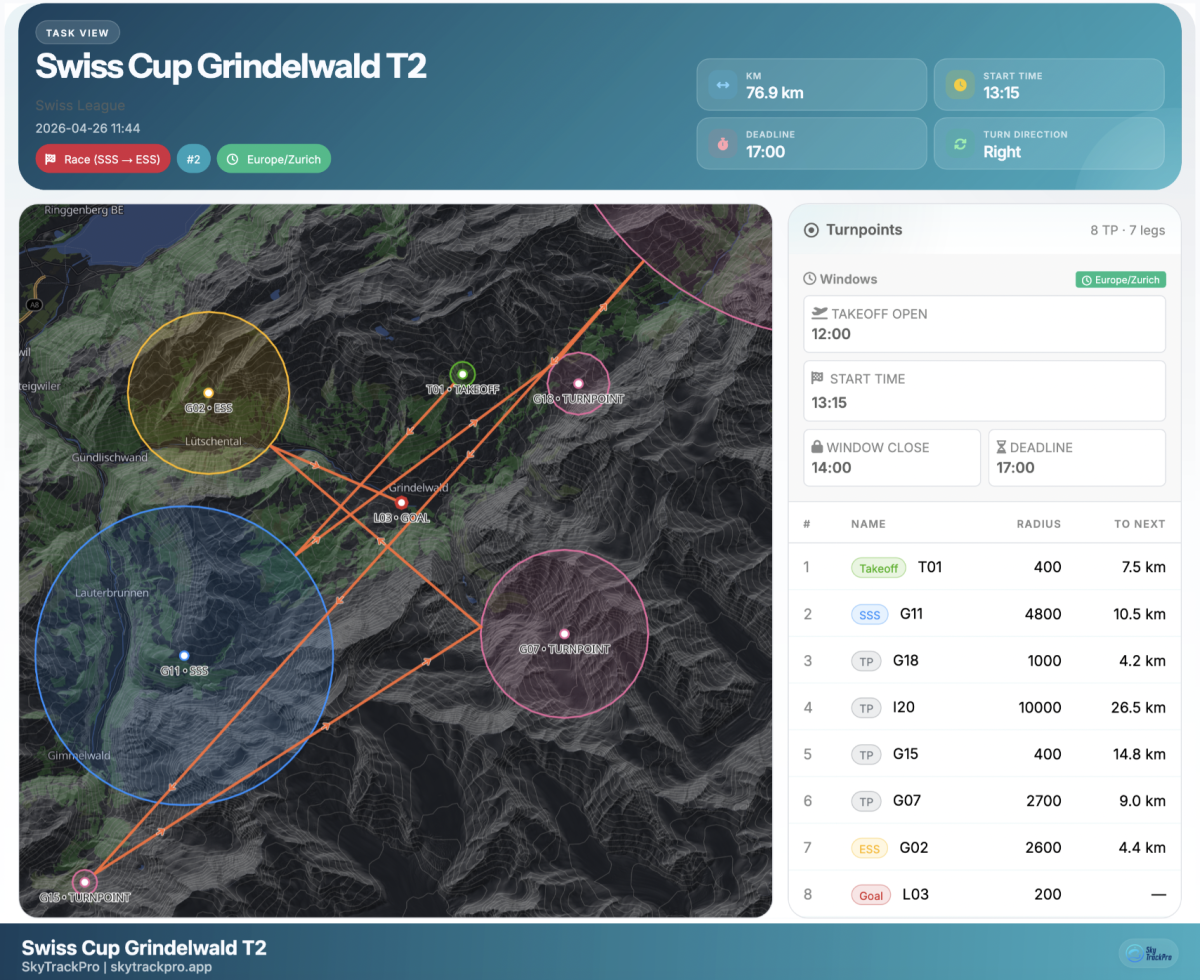
Toute la semaine, les compétiteurs vont participer à des manches (souvent appelée "tasks"), correspondant à un parcours aérien passant par différents point de passage imaginaires (appelés "balises") indiqué dans nos instruments de vol. Ce parcours doit être réalisé EN VOLANT, et un pilote posé ne peux pas re-décoller pour continuer. Chaque jours, une manche différente sera proposée par un comité de pilotes, en corrélation avec la météo du jour (exemple en image ci-dessous). Une période de décollage est donnée, laissant suffisamment de temps à tous les pilotes de s'envoler et de se placer par rapport au rayon de départ, et une heure de start est définie marquant le moment où les pilotes ont le droit de traverser la balise du start (appelée "SSS" ou "Start of Speed Section). Pour gagner, il faut accumuler le plus de point à la fin de la manche. Pour se faire, le pilotes se voit attribuer des points (appelés "Time points") de part le temps qu'il met pour atteindre l'arrivée (appelée "ESS" ou "End of Speed Section"), mais également par sa capacité à mener la danse et prendre des choix stratégique avant tout le monde (on appelle ça les "leading points"). Un dernier type de points est attribué au pilote, c'est les points distance qui récompense le pilote en fonction de la distance parcourue (qui est donc maximum si ce-dernier passe la ligne d'arrivée). A noter que l'ESS n'est pas forcément (et généralement pas) la ligne d'arrivée ! Il existe une dernière balise appelée "Goal" après l'ESS qui marque l'arrivée de la course. Il faut donc voir l'ESS comme la ligne d'arrivée du temps, mais le Goal comme l'arrivée finale. Un pilote arrivant premier mais n'arrivant pas au Goal ne se verra pas attribuer les points temps et descendra donc considérablement dans le classement.
À la fin de la semaine, chaque pilote a donc un certain nombre de points par manche (6 manches au total pour les championnats suisse) et le total donne le classement final de la compétition et désigne le vainqueur !
A paragliding competition, how does that work ?
Throughout the week, competitors will participate in rounds (often called "tasks"), each consisting of an aerial course passing through various imaginary checkpoints (called "Turnpoints") indicated on their flight instruments. This course must be completed IN FLIGHT, and a pilot who has landed cannot take off again to continue. Each day, a different round will be proposed by a committee of pilots, taking into account the day's weather (see example image below). A takeoff period is given, allowing sufficient time for all pilots to take off and position themselves within the starting radius, and a start time is defined, marking the moment when pilots are allowed to begin the race from the air by tagging the start turnpoint (called "SSS" or "Start of Speed Section). To win, a pilot must accumulate the most points by the end of the round. To do this, drivers are awarded points (called "Time points") based on the time it takes them to reach the finish line (called the "ESS" or "End of Speed Section"), but also on their ability to lead the race and make strategic decisions before everyone else (these are called "leading points"). A final type of point is awarded to the driver: distance points, which reward them based on the distance covered (which is therefore maximized if they cross the finish line). Note that the ESS is not necessarily (and generally is not) the finish line! There is a final marker called the "Goal" after the ESS that marks the end of the race. Therefore, the ESS should be seen as the time finish line, but the Goal as the final finish. A driver who arrives first but does not reach the Goal will not be awarded time points and will therefore drop considerably in the rankings.
At the end of the week, each driver has a certain number of points per round (6 rounds in total for the Swiss championships) and the total gives the final ranking of the competition and designates the winner!
Exemple de task (ici à Grindelwald) :
Example of a task (here in Grindelwald) :